Digital Marketing Analytics Case Study
Measuring sentiment to drive engagement in tech & e-commerce
-
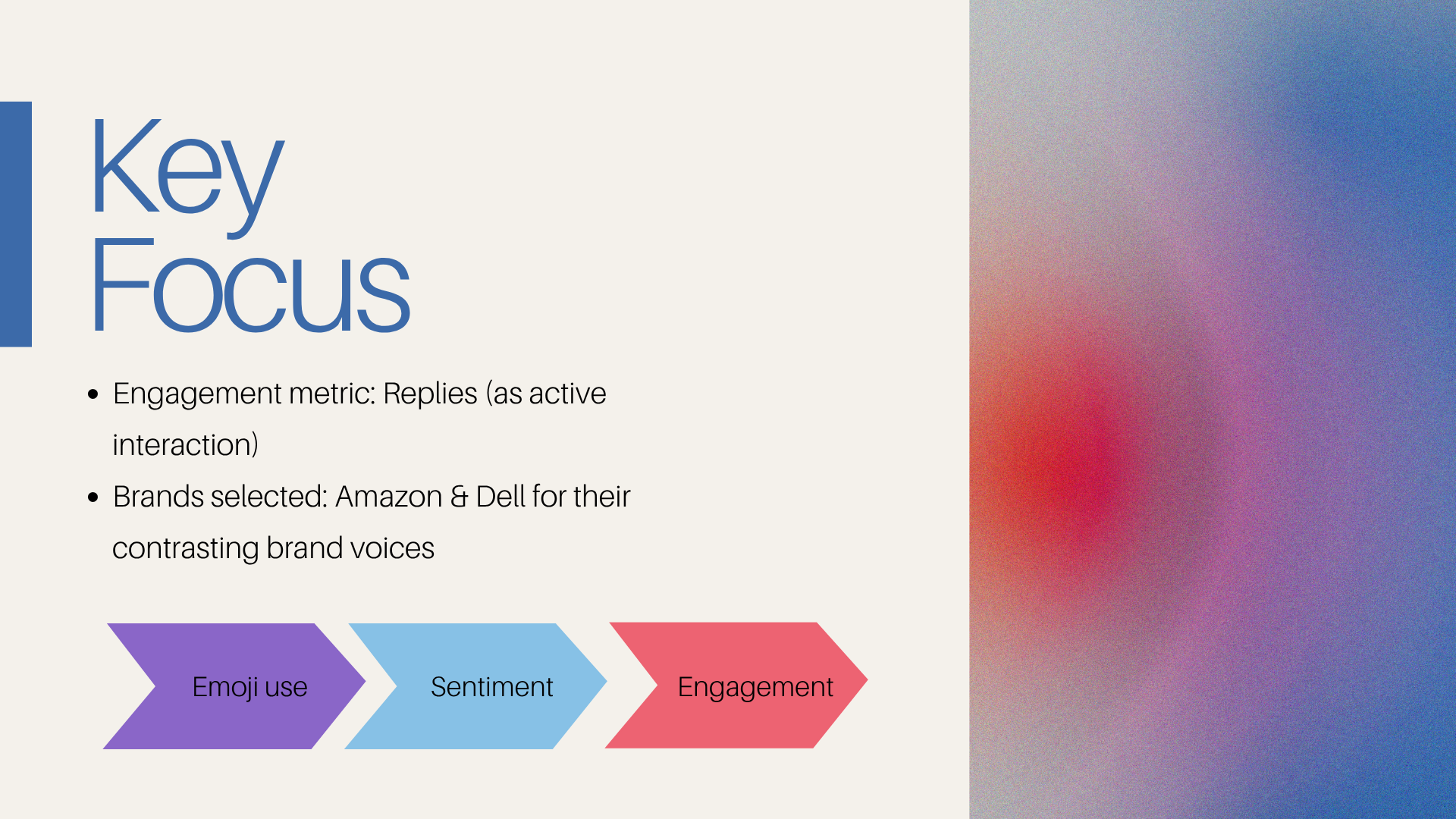
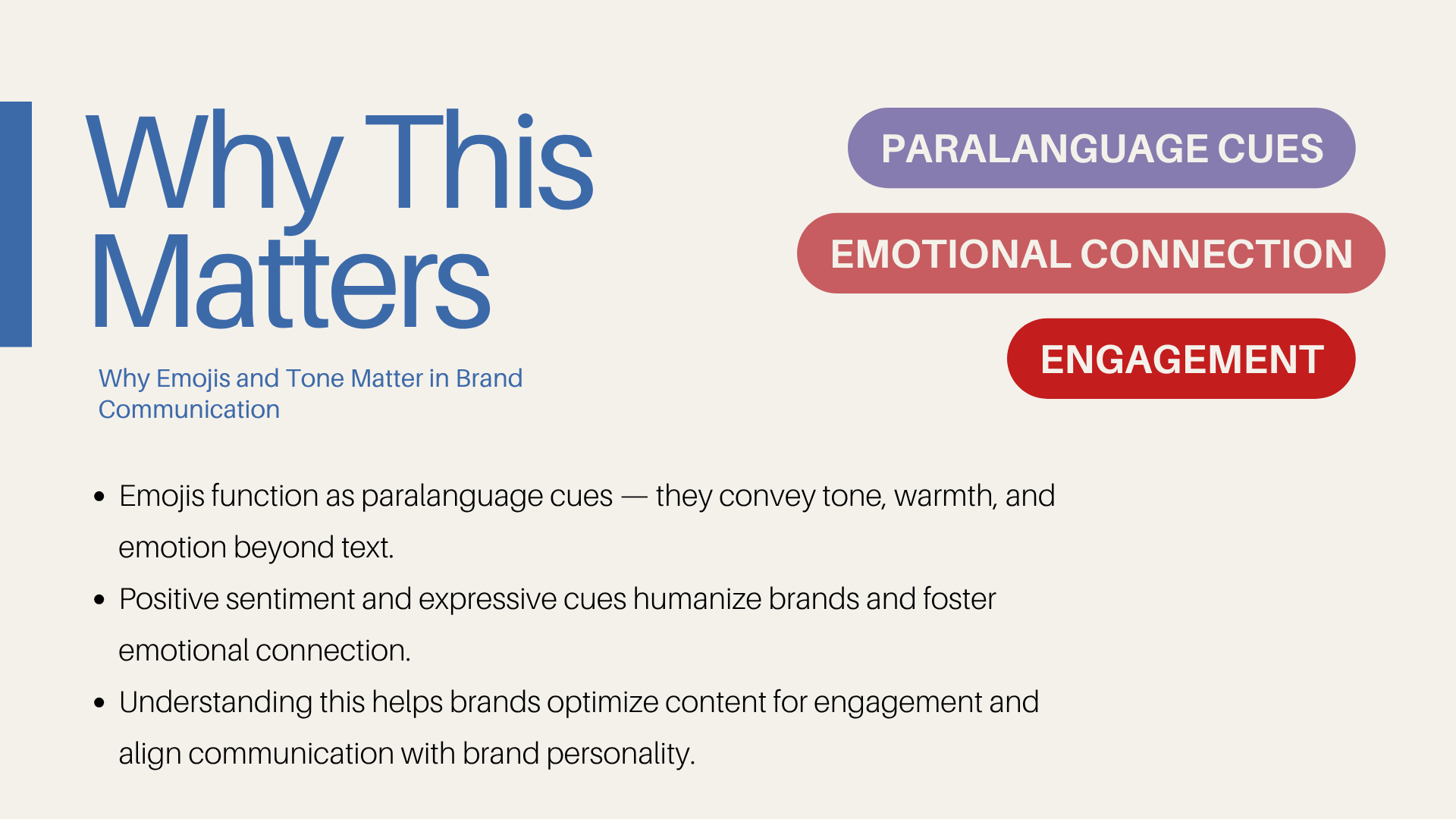
We analyzed the social media strategies of two global leaders to demonstrate how advanced analytics can optimize engagement. This project showcases our approach to turning raw social media data into actionable strategy. The aim was to evaluate how sentiment (emotional tone) and emoji use (paralanguage cues) influence engagement on Twitter/X. By studying Amazon and Dell, we could compare two very different approaches to brand communication — one sentiment-driven, the other emoji-heavy — and identify what drives stronger audience responses.
-
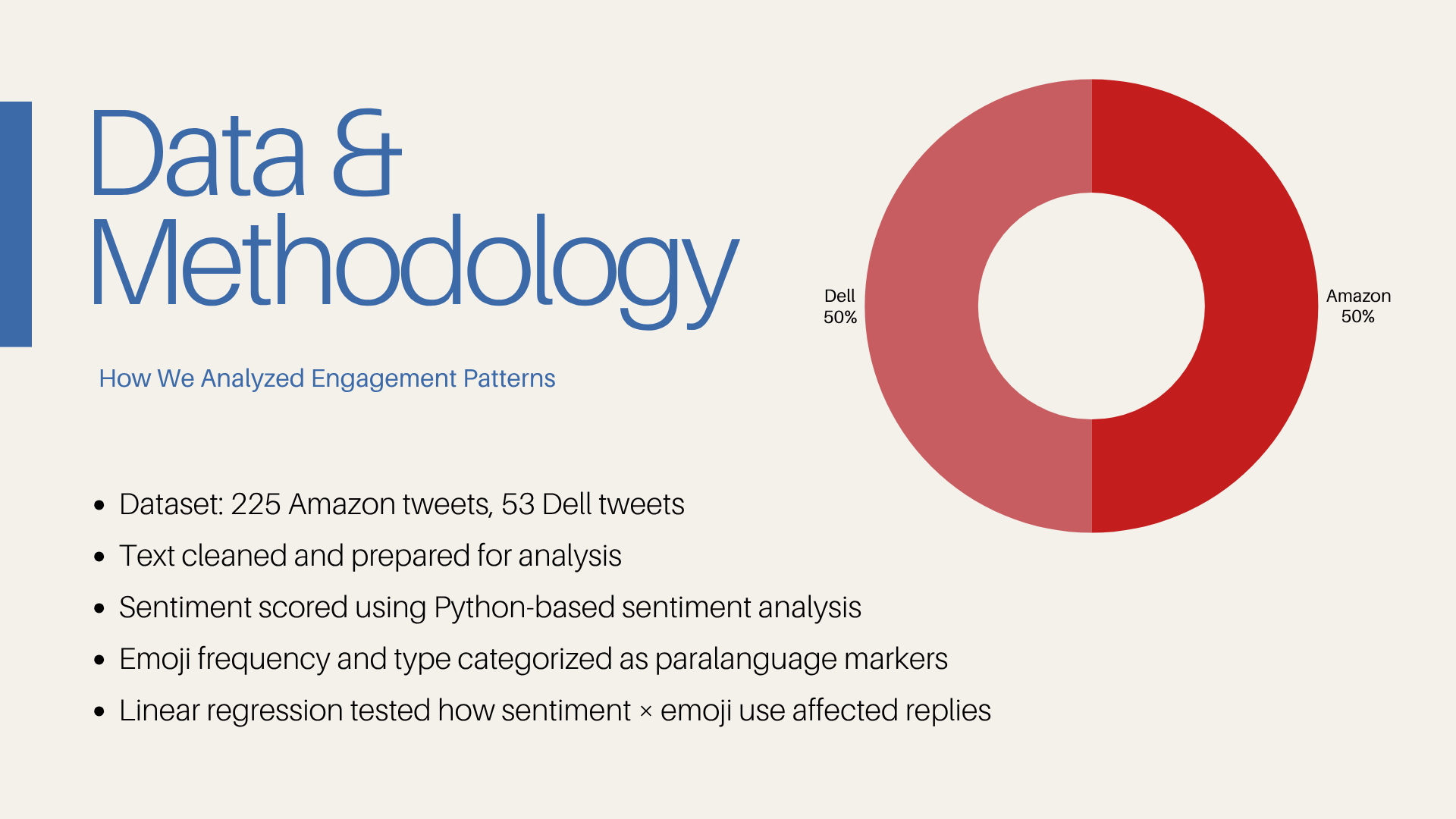
Data Collection & Cleaning: Compiled and refined tweet data (225 Amazon, 53 Dell).
Sentiment Analysis: Used Python to classify emotional tone and map it against engagement.
Emoji Analysis: Measured frequency and type of emojis, highlighting contrasting brand styles.
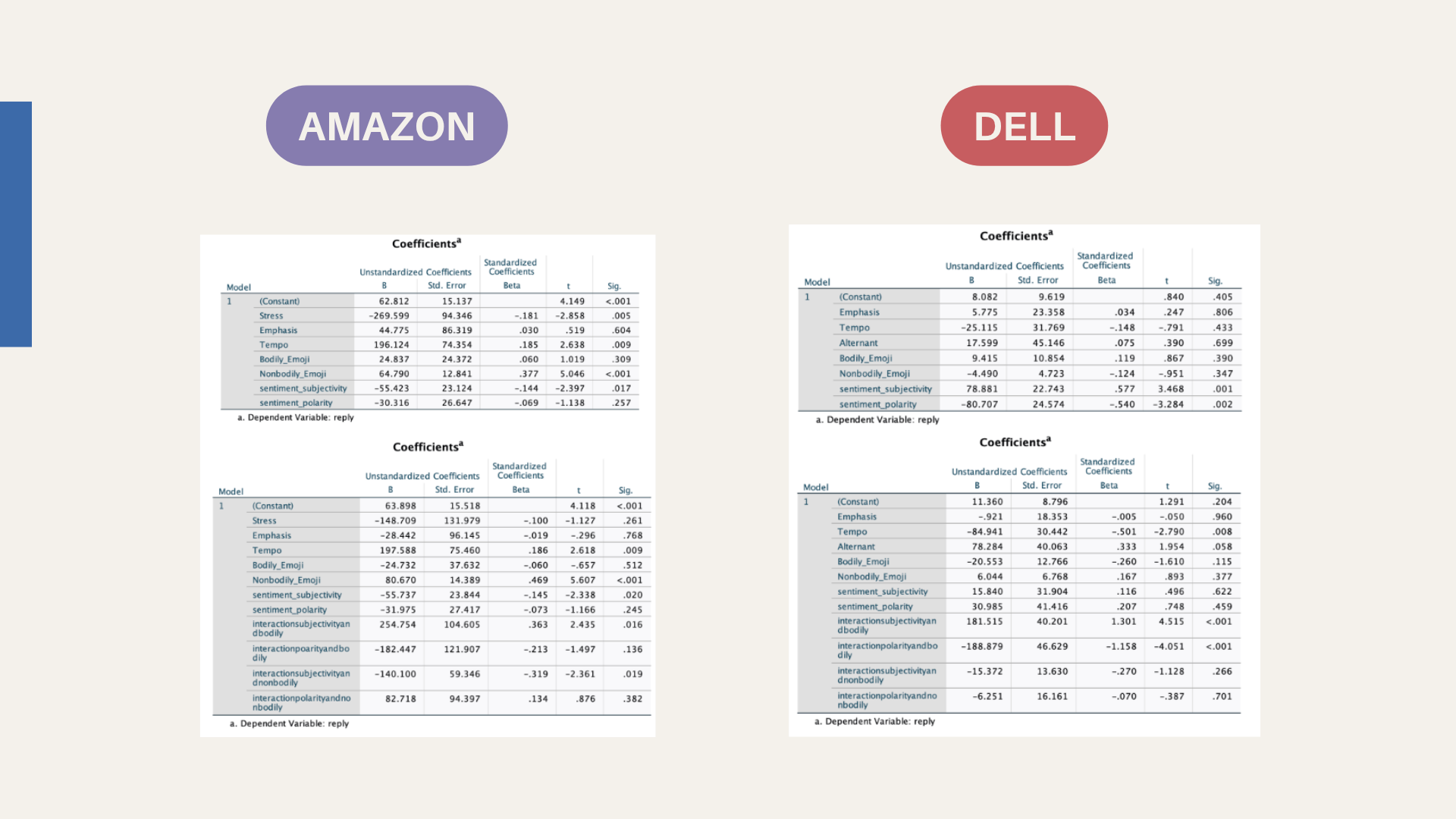
Regression Modeling: Tested direct and interaction effects of sentiment and emojis on engagement.
Strategic Lens: Applied brand identity frameworks and customer journey thinking to interpret results in a business context.
-
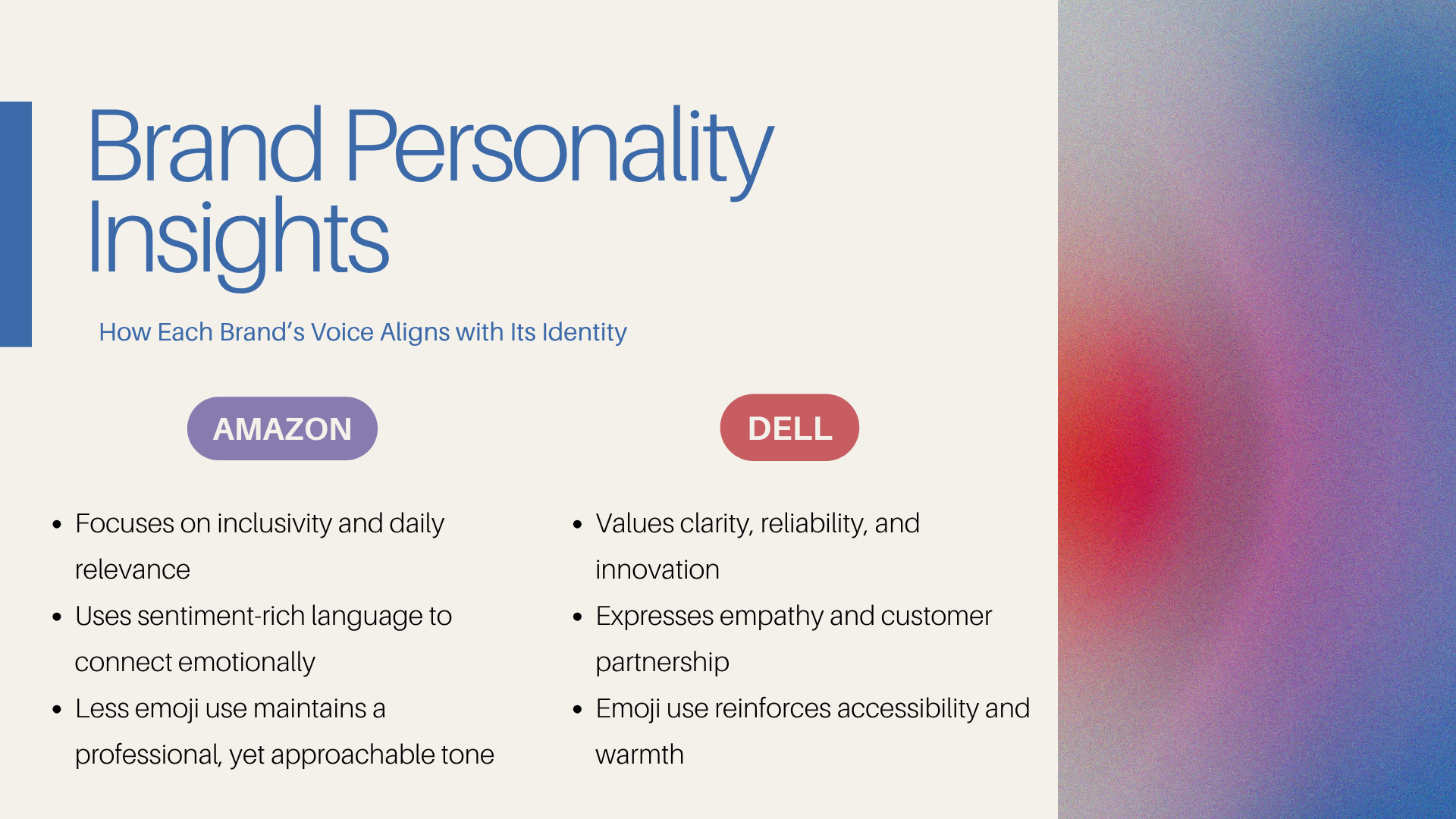
Amazon: Higher engagement from sentiment-rich posts than from emoji use.
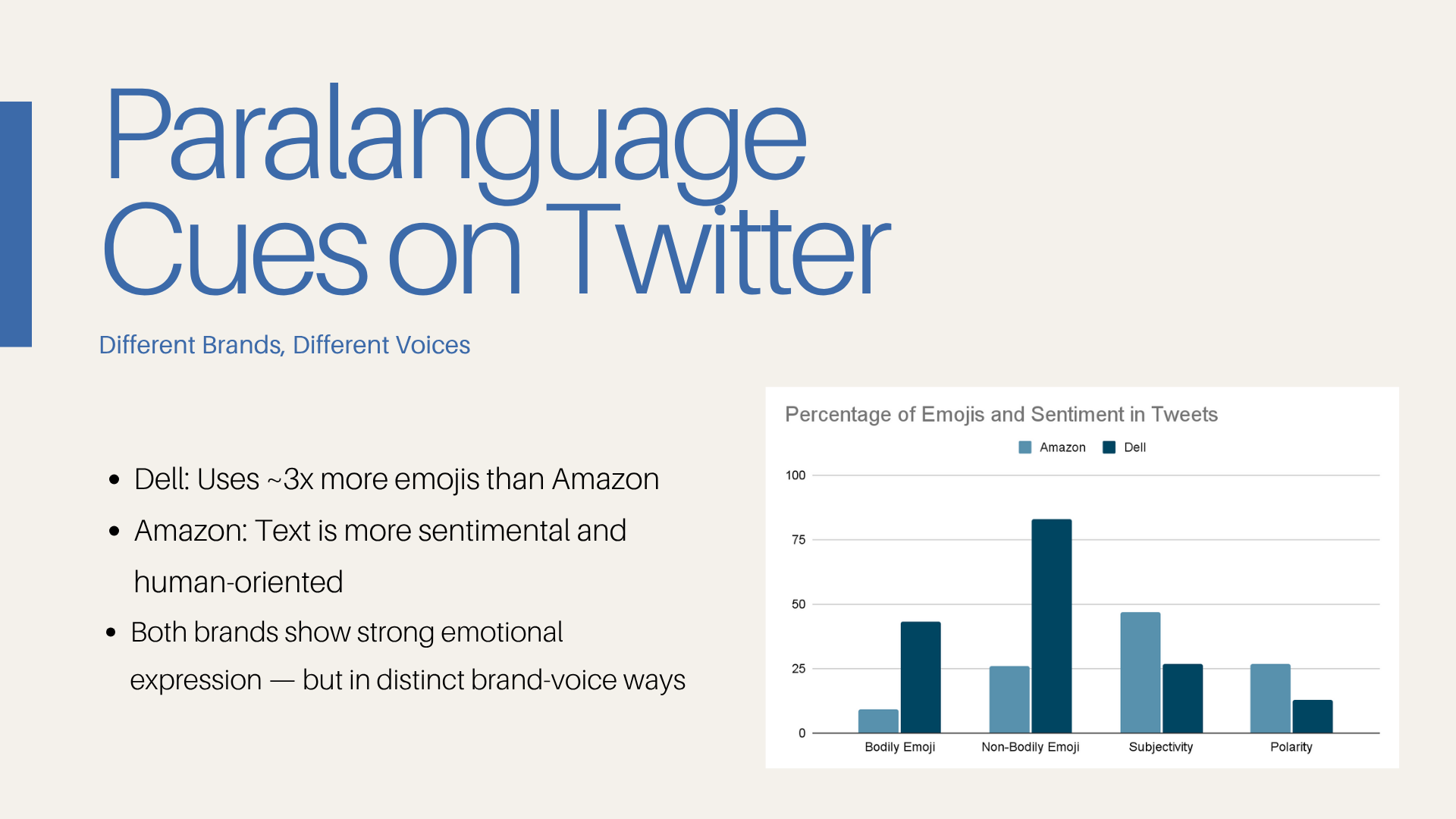
Dell: Relied heavily on emojis (3x Amazon), but this alone didn’t guarantee higher replies.
Interaction Effect: Positive sentiment + emojis together drove the strongest reply rates.
Brand Contrast: Amazon leaned on emotional storytelling; Dell used emojis as cues for innovation and expressiveness.
-
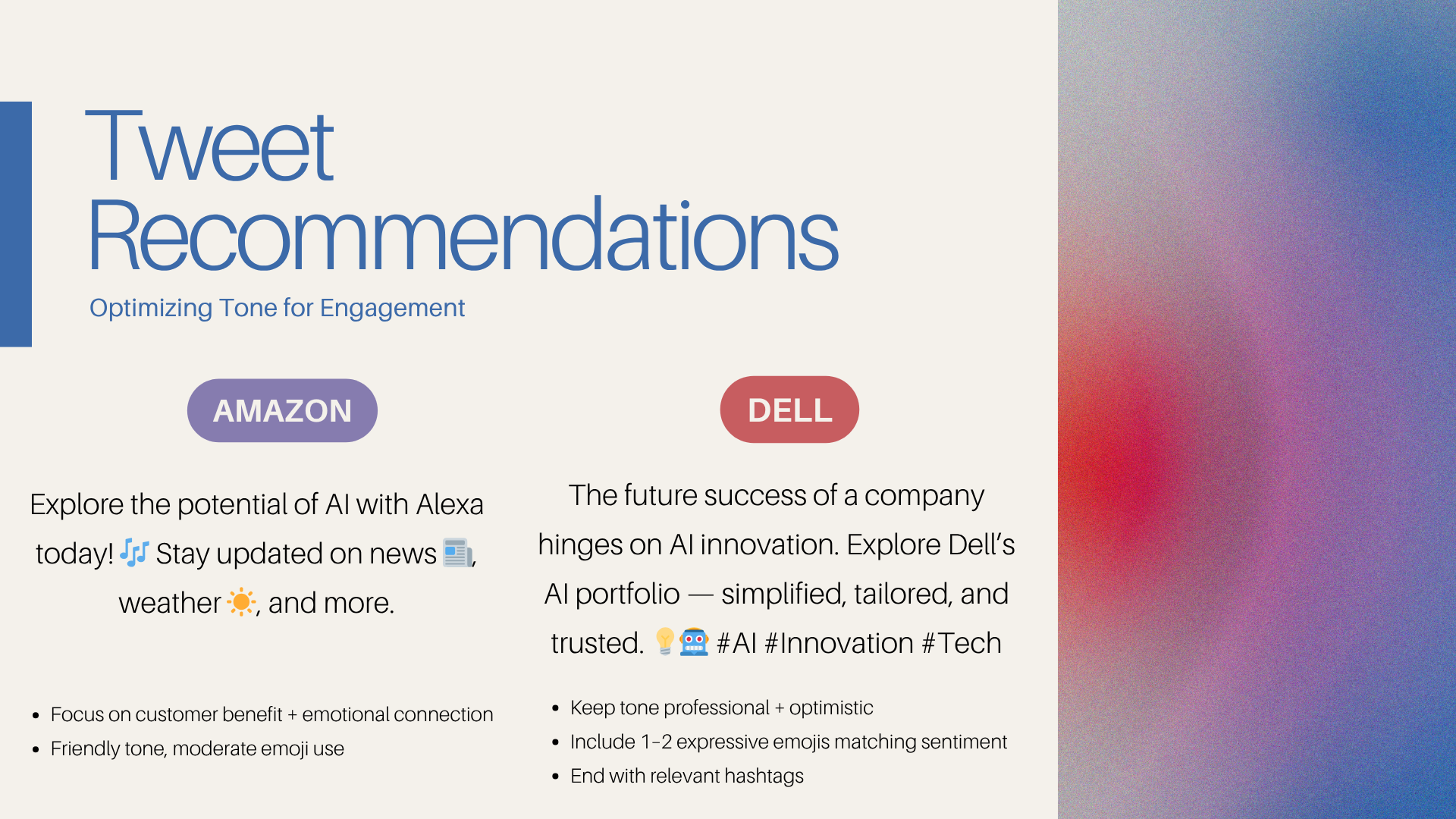
Pair emojis with positive sentiment for maximum engagement impact.
Align messaging with brand personality (emotional storytelling vs. technical cues).
Use insights to design content calendars balancing tone, format, and emotional resonance.
Track effectiveness through attribution models linking engagement to conversion.